
What is the difference between a licensed and a license-free walkie-talkie?
When equipping a business, it is common to hesitate between off-the-shelf equipment and a professional licensed fleet. From regulatory requirements and communication security to transmission power and costs, discover all the differences to make the right choice for your business.
What do the regulations say about free frequencies and licensing fees?
In France, license-free walkie-talkies operate on the European PMR446 (446 MHz) standard. These frequencies are free and open to everyone with no administrative procedures required. Conversely, a licensed system requires the allocation of a specific frequency by theANFR (National Frequency Agency). This annual fee guarantees the company the right to use a private channel, thereby avoiding network saturation and eavesdropping by third parties.
What are the pros and cons of a license-free (PMR446) walkie-talkie?
License-free equipment is appealing for its simplicity: it is ready to use right out of the box with no subscription required. However, the law imposes a strict maximum transmission power of 0.5 Watts with a fixed antenna. This results in a limited effective range (from 300m to 500m in urban areas, up to 1-2 km in open spaces). Furthermore, because channels are shared, the risk of interference from other nearby users is very high.
Why choose professional licensed equipment for your business?
Licensed radios (DMR) are designed for demanding professional environments. Their technical advantages are significant:
- Higher transmission power: Up to 5 Watts for portable units (10 times more than a PMR446) and up to 25W or 45W for base stations or repeaters.
- Privacy and encryption: Private channels coupled with digital encryption to prevent communication interception.
- Advanced safety features: Integration of lone worker protection (LWP) and man-down detection, emergency calling, and GPS geolocation.
Is it possible to install a radio repeater on license-free equipment?
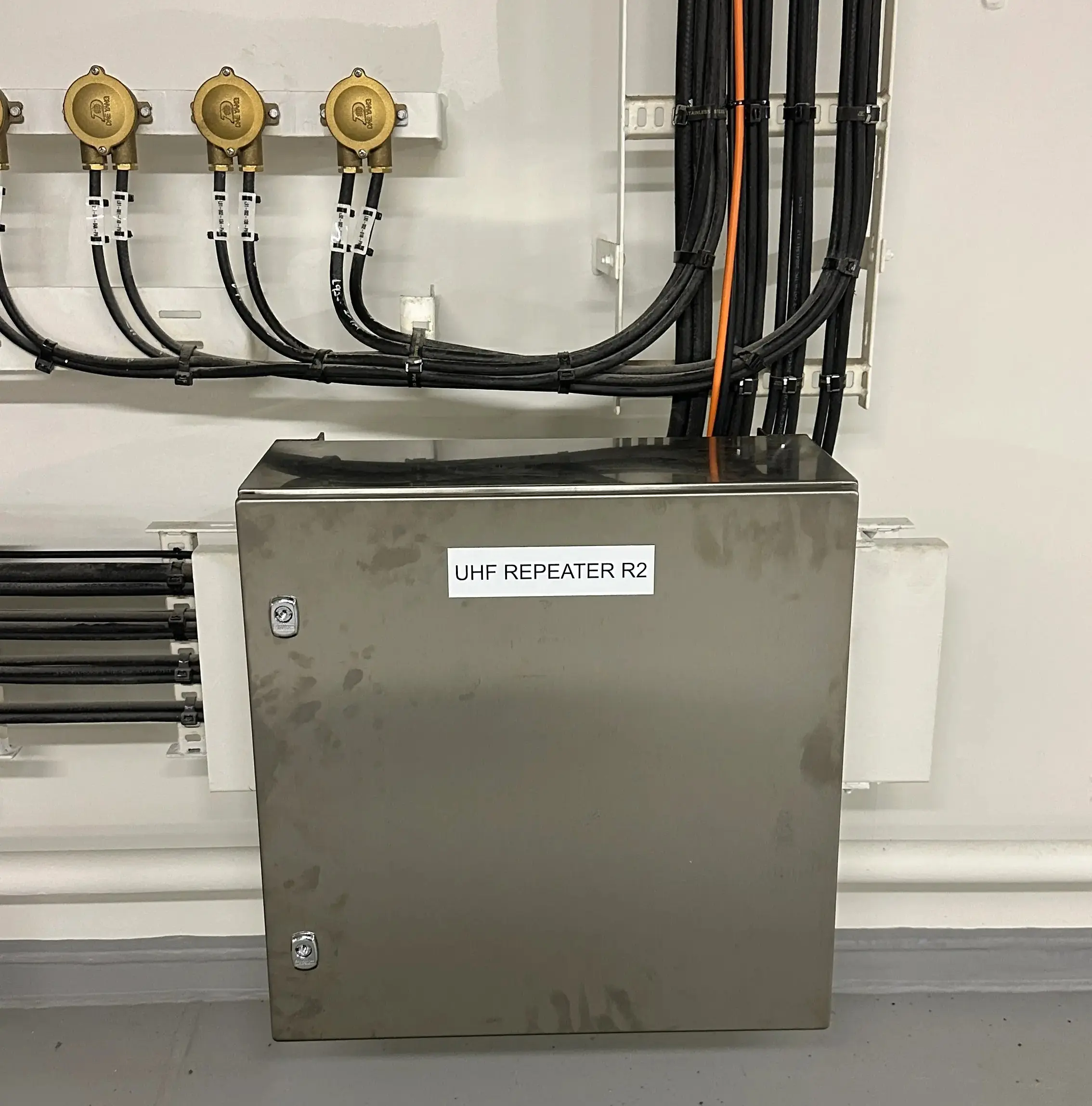
No, PMR446 regulations strictly prohibit connecting to a repeater or modifying the original antenna to increase gain. If your industrial site, factory, or construction site requires a radio repeater to overcome concrete obstacles or cover several kilometers, you must opt for a professional solution licensed by the ANFR.
What budget should be planned for purchase costs and frequency fees?
While license-free equipment has no recurring costs, the expense of replacing broken hardware or dealing with lost efficiency due to interference often outweighs the initial savings. For a licensed network, costs include the purchase or rental of rugged terminals and an ANFR fee (the amount of which varies solely based on the size of the coverage area). This investment ensures service continuity and the operational safety of your teams.
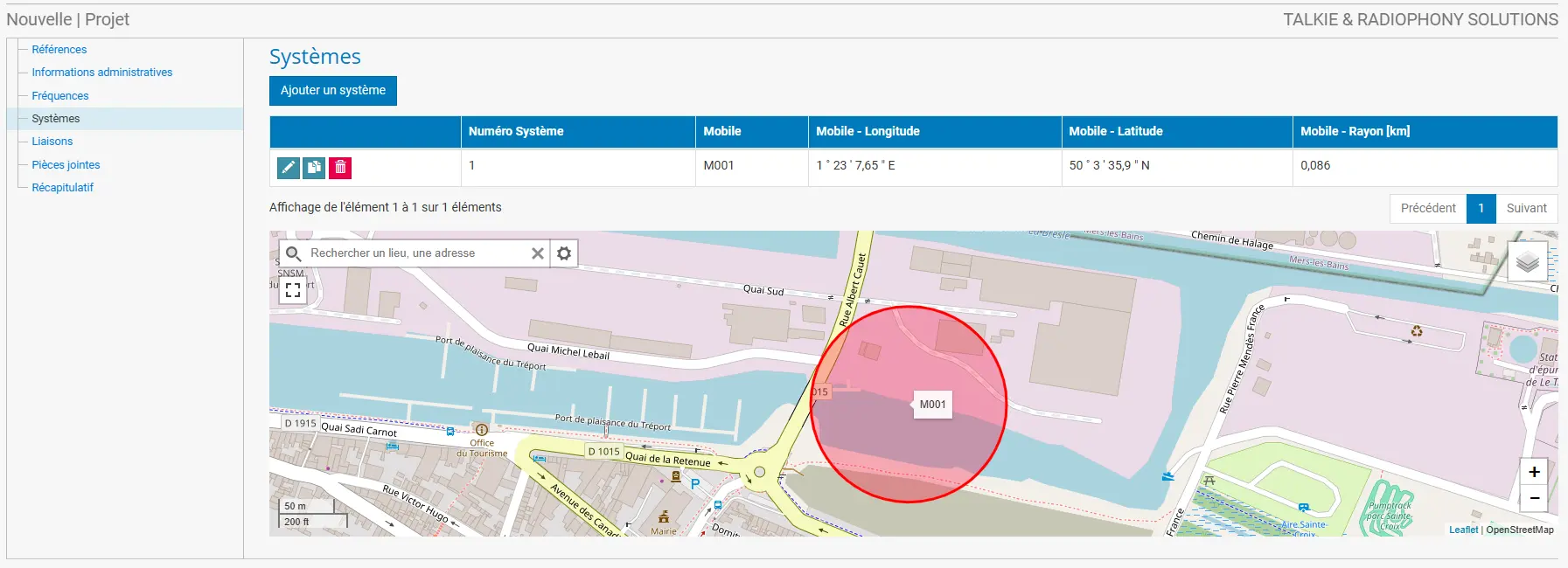
Why entrust the management of your radio licenses and equipment to TRPS?
Based in Le Havre and operating both in France and internationally, TRPS (Talkie & RadioPhony Solutions) handles all your radiocommunication projects. We conduct technical assessments of your needs, manage the administrative procedures with the ANFR to reserve your frequencies, and custom-program your terminals (Motorola, Hytera, etc.). Contact the TRPS team today to design the radio network best suited to your business.
Ready to optimize your field communications?
Need to streamline your team's communications or keep your lone workers safe? Whether you need an urgent rental, an on-site coverage study, or a free demonstration, we are here to help you design the perfect solution for your operational needs.