
Lone worker protection: how to keep lone workers safe with a two-way radio?
Night rounds, boiler room maintenance, or work in the depths of an industrial site: in the event of a fall or sudden illness, no one is there to raise the alarm. Discover how to equip your lone workers with a reliable and compliant Lone worker two-way radio.
What is lone worker protection and a lone worker device?
A Lone Worker Device is equipment worn by the employee that transmits an alert to a person or station responsible for dispatching emergency services. The term Lone Worker Protection refers more broadly to all measures taken to secure an employee working out of sight and earshot of their colleagues. In the field, we refer to "Lone Worker Protection two-way radios" or "lone worker radios" for professional radio terminals that integrate these alarm functions. Please note: an Lone Worker Device does not provide protection on its own; it is a tool for raising an alarm. It must therefore be part of an organized emergency response procedure.
What do labor laws say about lone working?
Employers have a general duty of care toward their employees (Article L4121-1 of the French Labor Code), which fully applies to situations of isolation. Several texts regulate this risk:
- Signaling and being rescued: Article R4543-19 requires that a lone worker be able to signal any distress situation and be rescued as quickly as possible. The text primarily targets elevator maintenance, but it serves as a reference for all sectors.
- External companies: during night shifts or work in isolated locations, no employee should work alone where they cannot be rescued quickly (Article R4512-13).
- Mandatory risk assessment document (DUERP): positions exposed to lone working must be identified and assessed within it.
For more information, the INRS provides details on regulations for lone working.
How do the automatic alarms on a lone worker walkie-talkie work?
A lone worker walkie-talkie combines a manually triggered alarm with automatic detection features that work even if the employee is unconscious:
- Emergency button: pressing the dedicated button sends a priority alert to the entire group or the monitoring station.
- Man Down (tilt detection): the accelerometer detects if the radio remains tilted beyond a set angle and duration, typically following a fall.
- No-movement detection: no activity is detected within a defined time frame.
- Lone Worker check-in: the user must regularly confirm their presence by pressing a button; if there is no response, the alarm is triggered.
Before the alert is sent, an audible and vibrating pre-alarm provides a few seconds to cancel a false alarm.
How does a lone worker alarm reach emergency responders?

DMR radio, 4G, or ATEX: which technology should you choose for your lone workers?
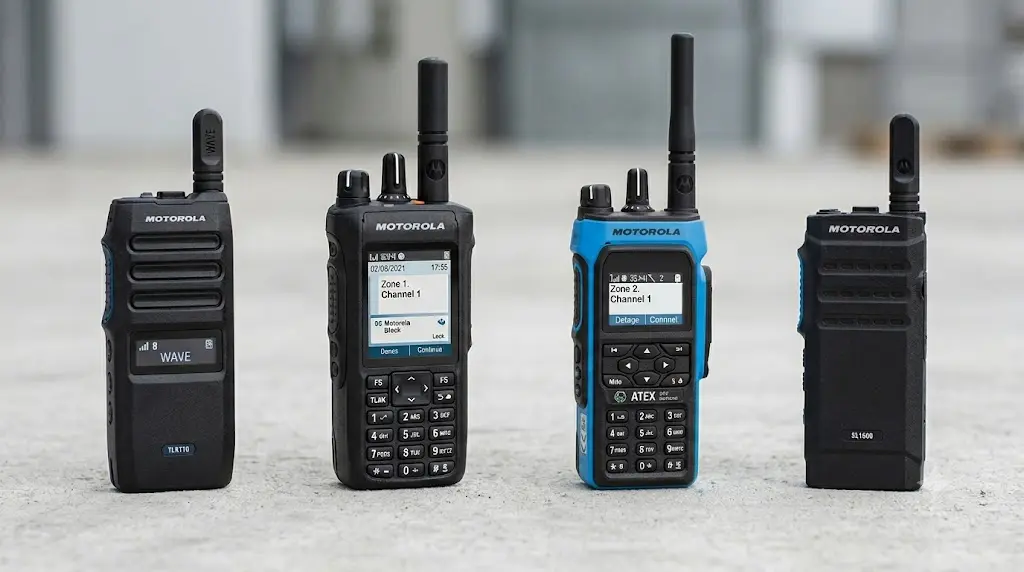
The right choice depends on where your teams are working:
- DMR radio with repeaters: for an industrial site, factory, or warehouse. Your private network operates independently of mobile carriers, and a well-placed repeater can also provide coverage in basements and concrete-heavy areas. (Link: DMR Radio Network: Professional Digital Excellence)
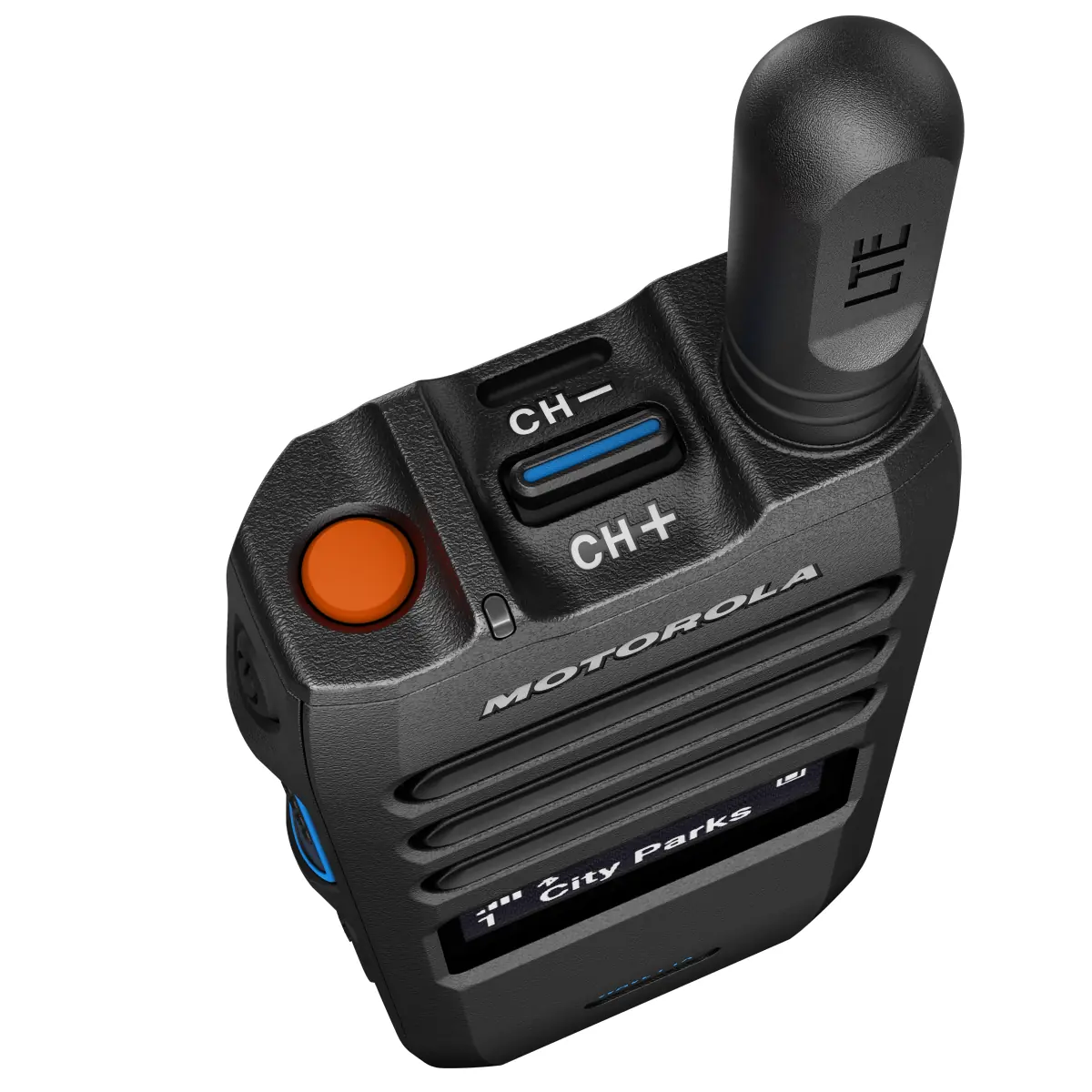
- WAVE PTX 4G/LTE: for mobile or multi-site staff (patrol officers, field technicians). Coverage is nationwide but depends on the mobile network. (Link: WAVE PTX: Motorola 4G LTE Radio with No Distance Limits)
- ATEX Radio: for explosive atmospheres (petrochemical plants, silos, wastewater treatment plants), where only certified terminals are permitted. (Link: ATEX Radio: Certified Safety in Explosive Zones)
What mistakes should you avoid when deploying a lone worker protection solution?
A poorly deployed Lone Worker Protection solution leads to either false alarms or alarms that never go through. The most common pitfalls:
- Poorly configured thresholds: an overly sensitive tilt angle or a motion-detection timer that is too short will cause frequent false alarms, leading users to eventually disable the feature.
- Unverified coverage: an alarm triggered from a dead zone (basement, utility room, tank) will not reach anyone.(Link: Coverage Auditing and Professional Radio Engineering)
- No reception procedure: you must designate who receives the alert (security desk, supervisor, remote monitoring center) and what they need to do.
- No testing or training: alarms must be tested regularly, and users must be trained on how to cancel the pre-alarm.
- Neglected battery life: A dead battery at the end of a shift renders the device useless. Ensure you have batteries suited to the duration of your rounds.
Why hire a radio expert to protect your lone workers?
Buying a lone worker protection walkie-talkie from a catalog is no guarantee that an alarm will be received. Only a real-world coverage study of your site can identify and eliminate dead zones where an alert would be lost. Based in Lillebonne, near Le Havre, and operating throughout France and internationally, TRPS (Talkie & RadioPhony Solutions) manages your entire project:
- radio auditing and field measurements; (Link: Coverage Auditing and Professional Radio Engineering)
- the ANFR procedures (French frequency regulator) for your frequency allocation;
- repeater installation;
- the custom programming of your Motorola terminals (man-down thresholds, inactivity timers, pre-alarms, alert groups);
- maintenance of your equipment fleet.
Contact the TRPS team today to deploy a reliable, compliant Lone worker protection solution for your lone workers.
Ready to optimize your field communications?
Need to streamline your team's communications or keep your lone workers safe? Whether you need an urgent rental, an on-site coverage study, or a free demonstration, we are here to help you design the perfect solution for your operational needs.