
Why does your walkie-talkie whistle and how can you eliminate feedback?
That shrill, deafening whistle that occurs when two radio users cross paths is a well-known challenge in the field. From the triggering of the acoustic feedback loop to the risks of discomfort and loss of information, discover why this happens and what hardware solutions can be deployed to eradicate it.
Why does a shrill whistle occur when two walkie-talkies are brought close together?
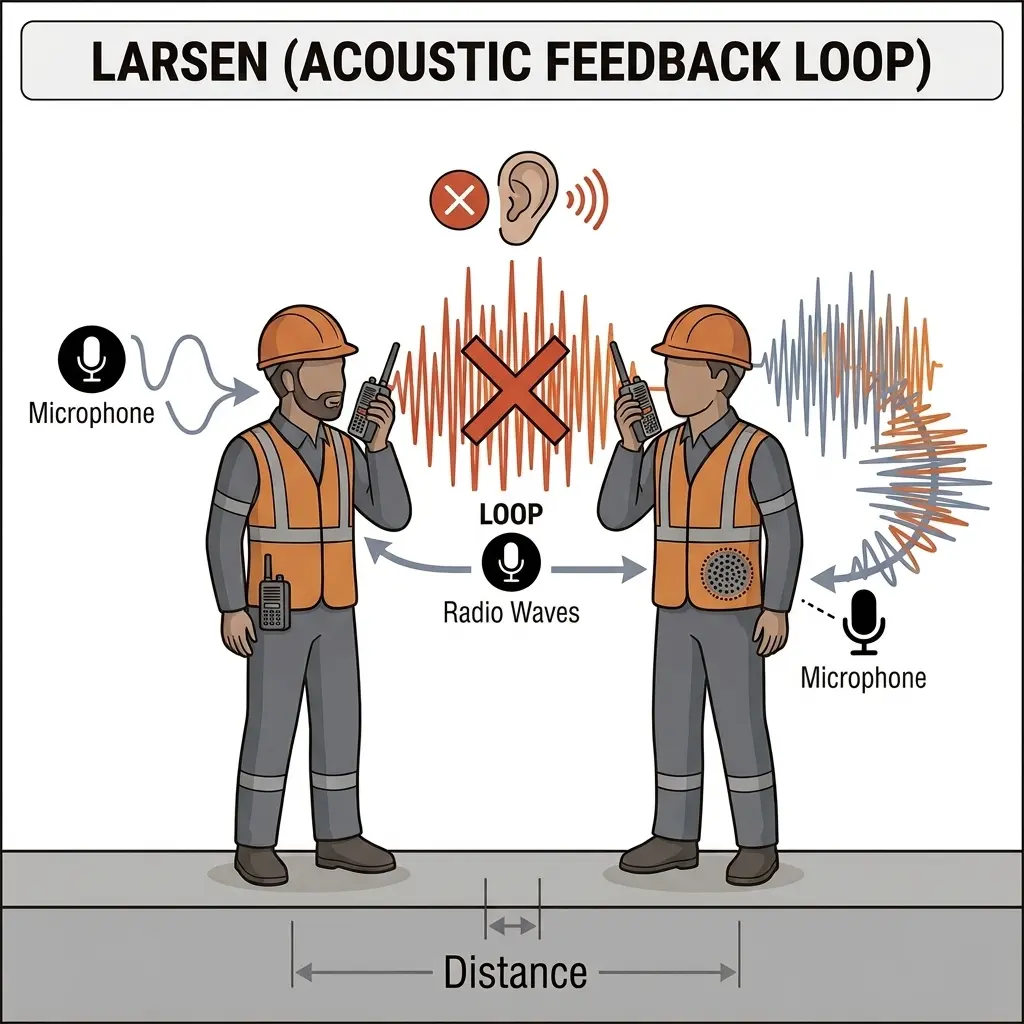
This high-pitched whistle is an acoustic feedback loop (or audio feedback). When one agent transmits with their walkie-talkie near a second device set to the same channel, the recipient's speaker broadcasts the sound. If this sound is picked up again by the transmitter's microphone, it re-enters the circuit, is instantly re-amplified, and generates a deafening screech. The closer the devices are and the higher the volume, the more intense the phenomenon.
What are the immediate steps to avoid feedback in the field?
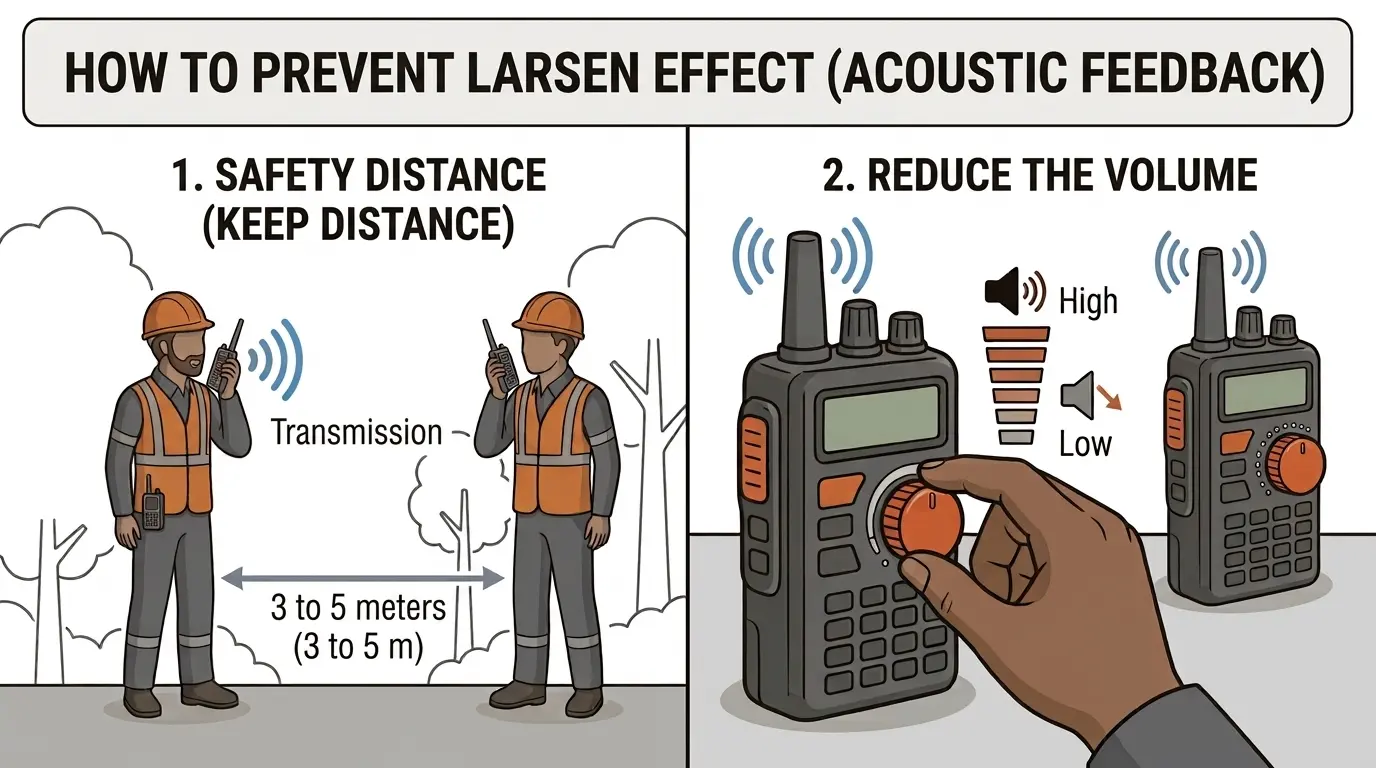
To stop feedback without specific equipment, two simple actions are required:
- Maintain a safe distance: Keep the two terminals at least 3 to 5 meters apart during radio transmissions.
- Adjust the volume level: Lower the speaker volume on radios working in the same area or temporarily switch to a secondary channel if you need to stand side-by-side.
How do remote microphones and earpieces eliminate acoustic feedback?
The most effective solution to permanently eliminate feedback is to separate voice capture from sound output:
- Remote Speaker Microphones (RSMs): Attached to the shoulder, they move the microphone away from the radio body and direct the sound toward the user's ear.
- Discrete or acoustic tube earpieces: By injecting sound directly into the operator's ear canal, the external speaker is muted. The microphone can no longer pick up the sound emitted by the nearby device, 100% eliminating the risk of feedback.
Why integrate Sensear smart headsets in noisy industrial environments?
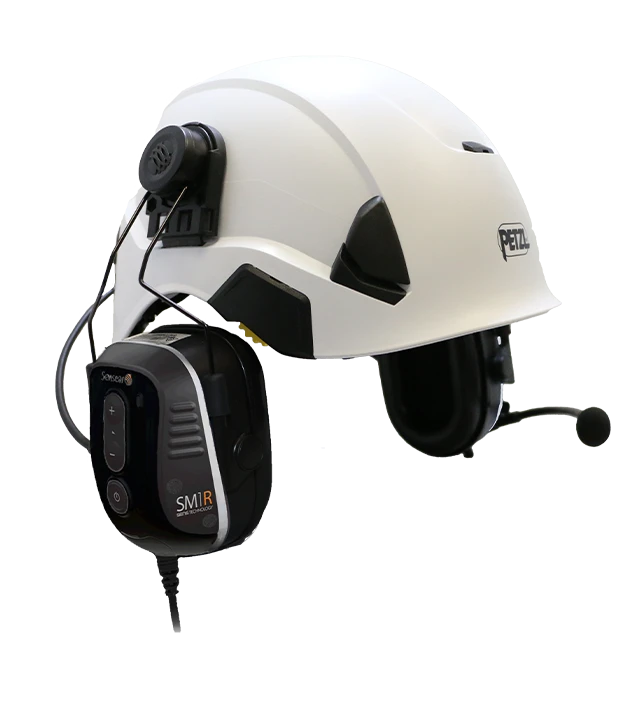
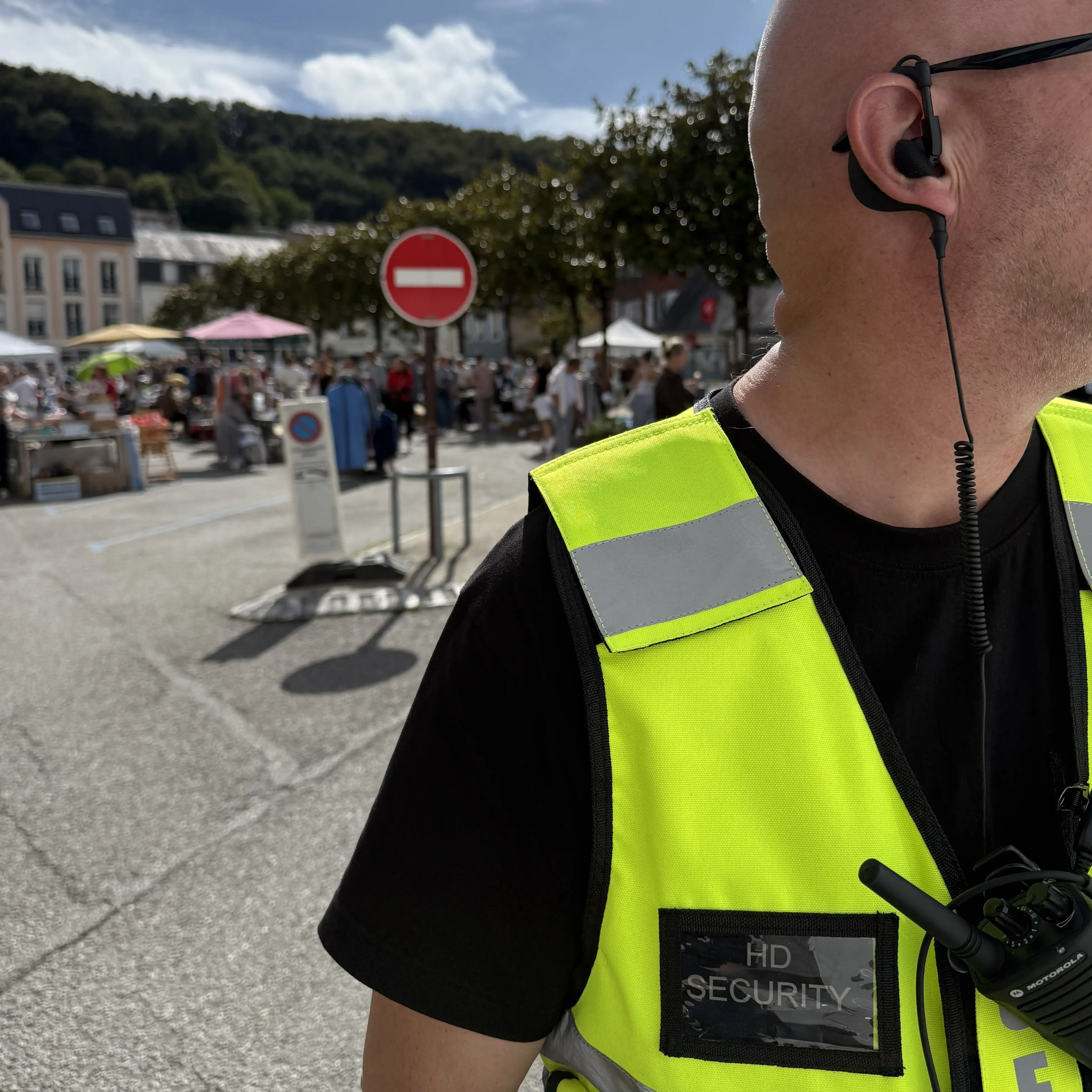
In factories, construction sites, or high-noise environments, high-protection headsets Sensear provide the ultimate technological solution. Equipped with SENS (Speech Enhancement, Noise Suppression) technology, these headsets isolate the human voice while attenuating impact and machinery noise. By suppressing ambient noise and perfectly isolating the audio chain, they prevent any acoustic feedback (howling), even if two employees are working side-by-side using continuous transmission.
Programming advanced audio settings on your professional radios
Feedback can also be mitigated directly within the terminal's software configuration. By adjusting the microphone gain (input sensitivity), enabling digital ambient noise reduction filters, or configuring the behavior of connected accessories, we reduce the equipment's sensitivity to feedback while maintaining optimal voice clarity for users.
Why equip and configure your radio accessories with TRPS?
Based in Le Havre and operating throughout France and internationally, TRPS (Talkie & RadioPhony Solutions) distributes, configures, and maintains a complete range of professional audio accessories adapted to all field constraints. From simple discreet earpieces to Sensear smart headsets for extreme environments, we help you assemble custom equipment to eliminate whistling and protect your employees' hearing. Contact the TRPS team today to test our audio solutions and optimize your workstations.
Ready to optimize your field communications?
Need to streamline your team's communications or keep your lone workers safe? Whether you need an urgent rental, an on-site coverage study, or a free demonstration, we are here to help you design the perfect solution for your operational needs.